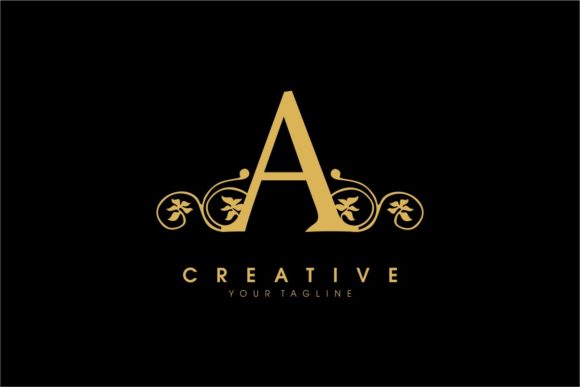
Logo Letter Initial A Decorative Style: A Comprehensive Evaluation for Brand Designers
In the competitive landscape of visual identity, selecting the right typographic foundation is often the most critical decision a brand makes. Among the various approaches available, the Logo Letter Initial A Decorative Style stands out as a sophisticated choice for entities seeking to blend tradition with artistic flair. This specific design approach focuses on the letter "A" not merely as an alphabetic character, but as a canvas for intricate ornamentation, structural balance, and symbolic depth. Understanding the nuances of this style is essential for professionals and business owners who are evaluating resources to elevate their visual presence.
The appeal of a decorative initial lies in its ability to convey heritage, elegance, and craftsmanship without relying on complex imagery. When applied to the letter "A," the design leverages the inherent triangular stability of the shape while introducing curves, flourishes, or geometric patterns that transform it into a unique monogram. Unlike standard sans-serif or serif fonts that prioritize legibility above all else, a decorative style invites the viewer to linger, analyzing the details that make the mark distinct. This section explores what defines this aesthetic, how it compares to other design methodologies, and the practical considerations involved in integrating it into a broader brand strategy.
Distinguishing Features of the Decorative Initial A
What truly separates a Logo Letter Initial A Decorative Style from generic typographic treatments is the intentional integration of artistry into the letterform itself. In this category, the stroke weight is rarely uniform; instead, designers manipulate thick and thin lines to create rhythm and movement. The crossbar of the "A" might be replaced by a floral motif, a geometric intersection, or a stylized symbol that reflects the industry of the user. The legs of the letter may flare outwards to suggest growth or converge to imply focus.
This style is particularly effective for brands that wish to project a sense of exclusivity or artisanal quality. It is common in sectors such as luxury fashion, high-end hospitality, boutique consulting, and artisanal food production. The visual complexity allows the logo to function as a standalone icon, capable of standing alone on packaging, stationery, or digital avatars. However, this complexity requires a high degree of technical execution to ensure the design remains recognizable at smaller scales.
When examining files labeled as Logo Letter Initial A decorative style Logo design Template, one should look for the balance between detail and clarity. A well-executed design maintains its integrity even when scaled down, whereas a poorly executed one may lose its defining features. The inclusion of source files, typically in formats like EPS, is crucial for this process, as it allows the designer to adjust the intricacy of the decoration to suit specific application requirements without rasterizing the image.
Comparing Decorative Styles with Minimalist and Modern Alternatives
To make an informed decision, it is necessary to compare the decorative approach against other dominant trends in logo design, specifically minimalism and modern geometric styles. While the Logo Letter Initial A Decorative Style embraces ornamentation and historical references, minimalist designs strip away all non-essential elements to focus on pure form. This comparison is vital because the choice often dictates the longevity and versatility of the brand identity.
- Decorative vs. Minimalist: A decorative "A" tells a story through texture and detail, making it ideal for brands with a rich narrative or a focus on luxury. Conversely, a minimalist "A" prioritizes immediate recognition and scalability, which is often preferred for technology startups or global service platforms. The tradeoff here is time-to-recognition versus emotional resonance.
- Decorative vs. Geometric: Geometric logos rely on perfect circles, squares, and triangles. While a decorative style may incorporate these shapes, it softens them with organic curves or hand-drawn aesthetics. If a brand needs to appear precise, data-driven, or futuristic, a geometric approach might be superior. If the goal is to appear human-centric, creative, or established, the decorative route offers a warmer tone.
- Custom Illustration vs. Template-Based: Many users consider pre-made templates like those offering EPS and JPEG formats as a cost-effective alternative to custom illustration. While templates provide a strong starting point, they lack the unique customization of a bespoke commission. However, for small businesses or personal projects, a high-quality template can offer 90% of the visual impact at a fraction of the cost.
The decision between these styles often hinges on the target audience's expectations. A law firm might find a decorative initial too frivolous, whereas a wedding planner or a jewelry brand would likely view it as a necessity. The key is alignment between the visual language of the logo and the values communicated by the business.
Technical Considerations and File Formats
One of the primary advantages of utilizing a professional Logo Letter Initial A decorative style resource is the availability of versatile file formats. The mention of obtaining both EPS (Encapsulated PostScript) and JPEG files addresses the dual needs of print and digital media. Understanding the distinction between these formats is essential for ensuring the logo performs correctly across different mediums.
The EPS format is a vector-based file type, meaning the image is defined by mathematical equations rather than pixels. This characteristic makes it indispensable for large-scale printing, such as billboards, signage, or embroidered merchandise. Vector files allow the High-Resolution Printable File to be resized infinitely without any loss of quality or pixelation. For a decorative logo with fine lines and intricate details, maintaining vector integrity is non-negotiable. Without the source files, a designer cannot easily adjust the color palette or modify the decorative elements to fit a new background.
In contrast, the JPEG format is a raster image composed of pixels. While convenient for web use, social media profiles, and quick previews, JPEGs have limitations regarding resolution. They are suitable for screen display where extreme precision is less critical than load speed. However, relying solely on JPEGs for a brand identity can lead to blurry images when the logo is printed on business cards or uniforms. Therefore, a complete package that includes Source files ensures that the brand owner retains full control over the asset's future applications.
Evaluating Suitability and Decision Factors
Selecting the right logo style involves weighing several factors beyond mere aesthetics. When evaluating whether a Logo Letter Initial A Decorative Style is the appropriate choice for your project, consider the following decision factors:
- Industry Alignment: Does your sector value tradition and craftsmanship? If you operate in architecture, interior design, or culinary arts, the decorative style resonates well. If you are in software development or logistics, a cleaner, more functional font might communicate efficiency better.
- Scalability Requirements: Will the logo appear on a tiny mobile app icon or a massive storefront sign? Decorative styles require careful testing to ensure that fine details do not disappear at small sizes. If the primary usage is digital-only, the complexity might need to be reduced.
- Longevity Trends: Ornamental styles can sometimes feel tied to specific eras. While classic decorative elements tend to age gracefully, overly trendy flourishes may date the brand quickly. A balanced approach that uses timeless motifs is generally safer for long-term brand equity.
- Editing Capabilities: The promise of an Easy to Edit file is a significant practical benefit. It allows for future rebranding efforts where the initial "A" might need to change color, orientation, or accompanying text. If the file is locked or flattened, the utility of the design diminishes significantly over time.
It is also important to address the concept of Copyright-free design. For many independent creators and small enterprises, licensing concerns are paramount. Acquiring a design that comes with clear copyright permissions eliminates legal risks associated with using unlicensed intellectual property. This ensures that the brand can build upon the logo without fear of infringement claims, providing peace of mind during the scaling phase of the business.
Practical Applications and Real-World Scenarios
Real-world examples illustrate the power of this design choice. Consider a boutique hotel chain that wants to evoke a sense of old-world charm mixed with modern comfort. A decorative "A" incorporating subtle architectural lines or botanical elements can serve as a powerful anchor for their branding. The logo appears on room keys, lobby signage, and linen tags, reinforcing the theme of luxury and attention to detail.
Similarly, a personal brand for a freelance photographer or writer might utilize a decorative initial to establish a signature look. In this context, the "A" becomes a personal seal, distinguishing the creator's work in a crowded marketplace. The High-Resolution Printable File capability ensures that their portfolio prints look sharp, while the Source files allow them to experiment with different color schemes for seasonal campaigns.
However, there are scenarios where this style is less effective. A fast-food franchise requiring instant recognition and high-speed scanning might find the decorative elements distracting. Similarly, a B2B industrial supplier dealing with heavy machinery might prefer a bold, block-letter approach that conveys strength and reliability over elegance and grace. In these cases, the Logo Letter Initial A Decorative Style could dilute the brand message rather than enhance it.
Making the Final Choice
The journey to selecting a logo involves balancing artistic preference with strategic necessity. A Logo Letter Initial A Decorative Style offers a compelling avenue for brands that wish to stand out through visual richness and historical resonance. By leveraging high-quality templates that include EPS and JPEG formats, businesses can access professional-grade assets that are both aesthetically pleasing and technically robust.
Ultimately, the success of the design depends on how well it integrates with the overall brand ecosystem. Whether you choose to customize the provided Source files extensively or use the design as a foundational element, the goal remains the same: to create a visual identity that is memorable, versatile, and true to the brand's core values. For those willing to invest the time to evaluate the tradeoffs between ornamentation and simplicity, the decorative initial presents a timeless solution for establishing a distinctive market presence.