Decorative Bird Element Feather for Design Projects
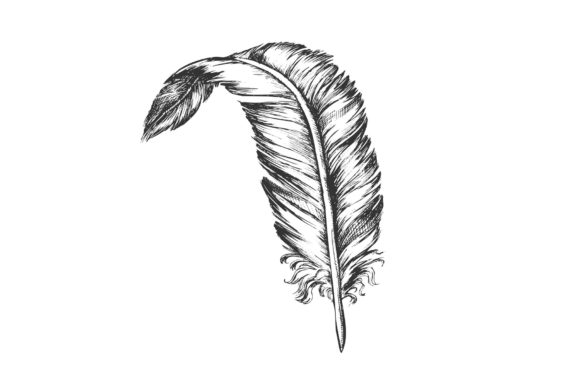
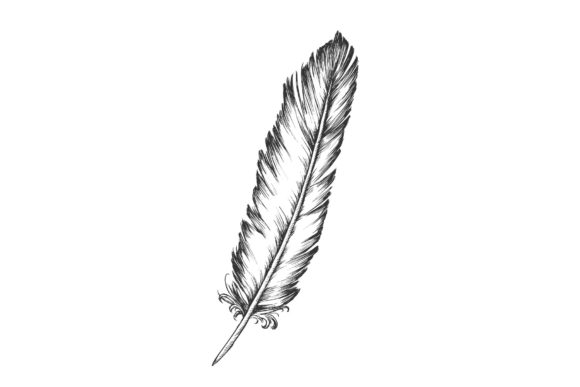
In the world of visual communication, a single well-placed detail can often carry more weight than an entire paragraph of text. This is particularly true when working with Decorative Bird Element Feather assets that prioritize intricate biological accuracy over generic abstraction. The specific design you are examining—a monochrome vector illustration depicting a feather standing in isolation, detailed with tiny follicles in the epidermis layer—offers a unique opportunity to elevate professional work through authenticity. Unlike mass-produced clip art that often feels flat or cartoonish, this retro-styled black and white illustration captures the complex texture of nature, providing a level of sophistication that resonates with modern audiences seeking genuine aesthetic value.
The Power of Biological Accuracy in Design
Why does the distinction between a generic feather shape and one formed by tiny follicles matter? For professionals ranging from graphic designers to educators, the answer lies in the psychology of perception. When a viewer encounters a high-fidelity representation of a natural element, their brain processes it differently than it does a simplified icon. The Decorative Bird Element Feather Monochrome Vector described here mimics the actual structure found in the outer skin layer of birds. This attention to anatomical detail creates a subconscious sense of trust and quality.
Consider a scenario where a small business owner is rebranding their eco-friendly product line. They need packaging that communicates sustainability without relying on cliché green leaves or pixelated trees. By incorporating this detailed feather illustration into their label design, they signal a commitment to precision and natural origins. The visible follicles suggest that the brand understands the source material intimately. Similarly, for bloggers and content creators, using such specific imagery in headers or sidebars can increase engagement rates by breaking the monotony of standard stock photography.
Retro Aesthetics Meet Modern Utility
The template's design in a retro style adds another layer of versatility. Black and white illustrations have seen a significant resurgence in recent years, moving away from the heavy gradients and shadows of the early 2000s back towards the clean, bold lines of mid-century engraving or etching. This Decorative Bird Element Feather fits seamlessly into contemporary layouts that favor minimalism while retaining a classic charm.
This stylistic choice is not merely about following trends; it serves a functional purpose. High-contrast black and white graphics ensure readability across various mediums. Whether printed on textured paper for a wedding invitation or displayed on a low-resolution mobile screen for a digital ad, the monochrome format maintains its clarity. The lack of color allows the intricate details of the feather's structure to take center stage, ensuring that the focus remains on the form rather than being distracted by hues.
Practical Applications Across Industries
The utility of this asset extends far beyond simple decoration. Its specific characteristics make it a valuable tool for solving distinct problems faced by different types of professionals.
- For Educators and Publishers: When creating textbooks or educational materials regarding biology, ornithology, or ecology, generic images can sometimes undermine the learning process. Using a vector that accurately depicts the follicles and epidermal layers provides students with a reference point that bridges the gap between textbook diagrams and real-world observation. It supports the goal of accurate knowledge transfer without the cost of commissioning a custom photograph.
- For Marketers and Entrepreneurs: In branding, consistency is key. The availability of the asset in both JPG and EPS formats means it can be used effectively at any scale. A marketer might use the JPG version for quick social media posts or email newsletters, while the EPS vector file ensures the image remains crisp when scaled up for large-format banners or trade show displays. This flexibility simplifies decision-making regarding file management and reduces the risk of pixelation errors during production.
- For Freelancers and Hobbyists: Creative individuals often face tight deadlines and limited budgets. Having access to a pre-designed, high-quality vector saves hours of time that would otherwise be spent sketching or searching for suitable stock photos. The retro style also offers a ready-made theme for projects requiring a vintage aesthetic, allowing creators to focus on the narrative of their project rather than the technicalities of drawing every individual barbule.
Enhancing Communication Through Visual Hierarchy
One of the most subtle yet powerful ways this Decorative Bird Element Feather improves results is by establishing visual hierarchy. In a dense layout filled with text and other graphics, a detailed monochrome element acts as a natural anchor. The eye is drawn to the complexity of the follicles, creating a focal point that guides the reader through the content. This can be particularly effective in newsletter designs or blog post headers where the goal is to capture attention quickly.
Furthermore, the monochrome nature of the illustration allows for easy integration into existing color schemes. If a brand uses blue and gold, adding a black feather illustration does not clash but rather complements the palette, adding depth and contrast. This adaptability solves the common problem of "color fatigue" in design, where too many competing colors dilute the message. By sticking to black and white, the designer ensures that the core message remains the priority.
Strategic Considerations and Limitations
While the benefits are clear, it is important to approach the use of this asset with a critical eye. No single graphic solution fits every scenario. The highly detailed nature of the feather, specifically the depiction of tiny follicles, may not translate well if the output size is extremely small. On a favicon or a thumbnail image, those intricate details could become muddy or indistinguishable. In such cases, users should compare options and perhaps opt for a simpler silhouette version of a bird element if the context requires extreme scalability.
Additionally, the retro style, while popular, may not align with brands aiming for a futuristic or hyper-modern look. A tech startup focused on artificial intelligence might find the organic, vintage feel of the feather slightly incongruous with their identity. It is crucial for creators to assess whether the emotional tone of the illustration matches the intended audience. For a boutique coffee shop or a literary magazine, the fit is perfect. For a software company selling cloud storage, it might feel out of place unless used ironically or as a subtle nod to "organic growth."
Maximizing Value Through Format Selection
The dual availability in JPG and EPS formats is a significant advantage, but understanding the strengths of each is essential for efficiency. The JPG format is ideal for web delivery where file size matters. It compresses well, ensuring fast load times for websites and social media platforms. However, once saved as a JPG, the image loses its scalability. The EPS format, being a vector, preserves the mathematical curves of the feather, allowing for infinite resizing without loss of quality. This makes it indispensable for print-on-demand services, embroidery digitization, or large-scale signage.
Professionals should adopt a workflow that leverages both formats. Start with the EPS file for all design development and printing needs. Then, export the final composition as a JPG for digital distribution. This approach ensures that the project retains its highest possible quality throughout the entire lifecycle, from concept to final publication.
In conclusion, the Decorative Bird Element Feather stands out not just as a decorative item, but as a strategic design component. Its combination of biological realism, retro styling, and versatile formatting addresses the practical needs of today's diverse creative landscape. By choosing assets that offer depth and specificity, professionals can create work that feels more intentional, credible, and engaging. Whether used to support a marketing campaign, enhance an educational resource, or simply add elegance to a personal project, this illustration proves that sometimes the smallest details make the biggest impact.